Cape Town Climate Week 2026: Five years of celebrating community-led climate solutions
Highlights from Cape Town Climate Week 2026
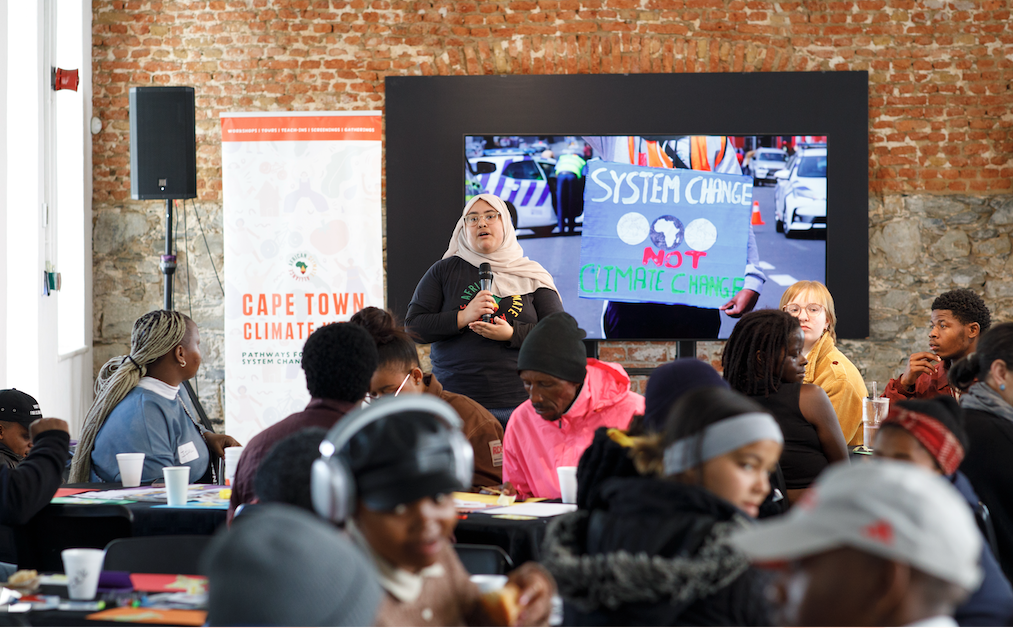
Cape Town Climate Week Participants gather at the Desmond and Leah Tutu Legacy Foundation for a session on Gender and Climate. Photo credit: The Dollie House
From 31 August - 5 September, Cape Town Climate Week returned for its fifth year running as a city-wide celebration of the grassroots solutions to some of our most urgent crises: climate change, spatial injustice, food and water insecurity, a broken energy system, migration and gender injustice.
The event couldn’t have arrived at a more timely moment: currently, Cape Town is bracing for a strengthening El Nino season, following a winter that has already brought record-breaking floods to the Western Cape. As extreme weather increases on the backdrop of growing inequality, Cape Town Climate Week asked what resilience looks like when it’s built from the ground up. And what it might take to transform the systems that are leading to these intersecting and compounding issues.
Over six days and eight events, over 600 activists, community leaders, students, and citizens travelled on trains, explored food justice, mapped water access, watched films, walked the streets exploring migrant organising, and closed the week off with a solidarity picnic. Climate Week organiser Samantha Müller had this to say:
“Sometimes, these problems feel too big to tackle. But, by learning about alternative forms of transport, housing, urban planning, energy systems, food growing, water resilience and gender-inclusive policy in a fun way, we hope to turn overwhelm into collective grassroots action”.
Take a look at a few of the highlights:
Day 1: Train of Thought and Undoing Spatial Apartheid
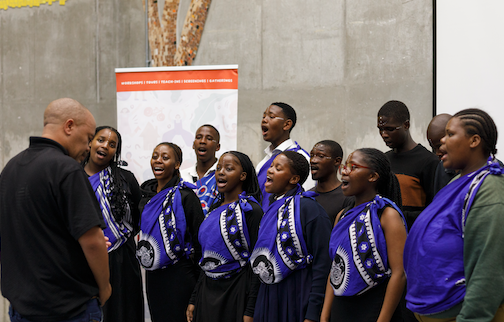
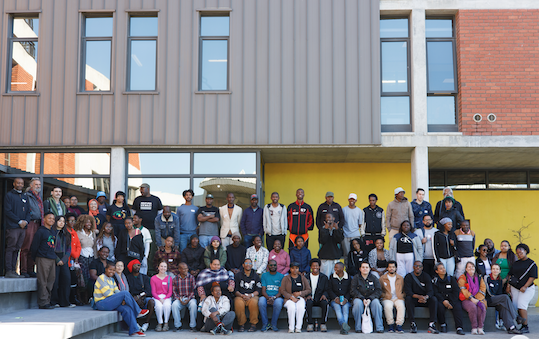
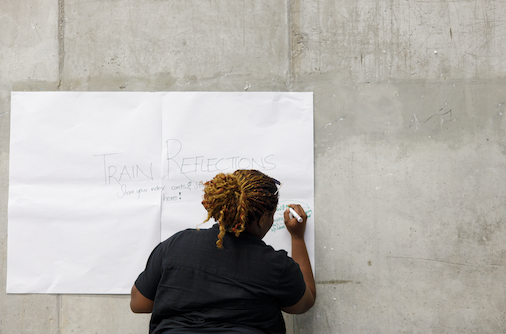
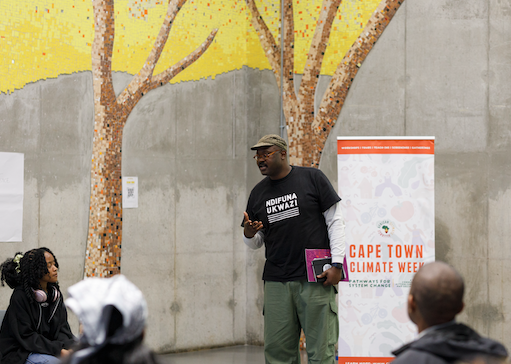
The kick off to Cape Town Climate Week 2026 reminded us why climate justice and spatial justice are so interconnected. We explored that from two angles:
A train ride from Cape Town Station to Khayelitsha, where fellow riders shared how transport, housing, and inequality influence each other.
An interactive workshop with Ndifuna Ukwazi and VPUU on how apartheid spatial planning still shapes climate vulnerability. Together, we explored climate-resilient housing and alternative building technologies through the lens of Ndifuna Ukwazi’s KwaLangalibalele Climate Resilient Housing Project which uses sand-bag technology. And we learned about how communities are organising to influence the decisions that affect where and how they live, reflecting on what climate justice looks like in practice when it comes to organising and building power within spatial policy processes.
Day 2: Climate Cafe & Screening
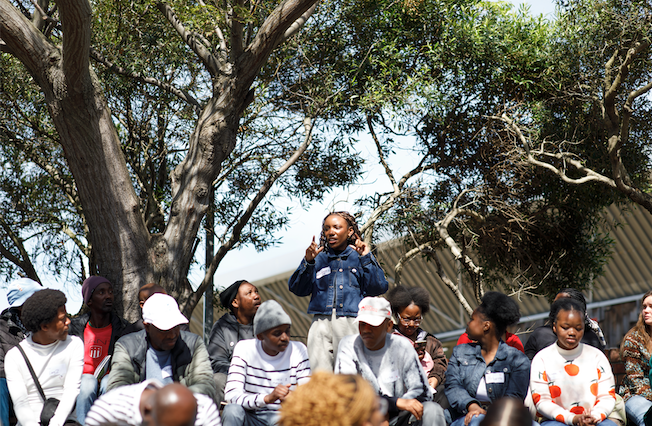
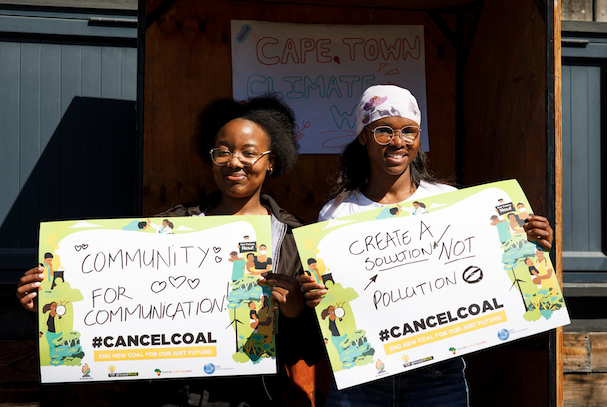
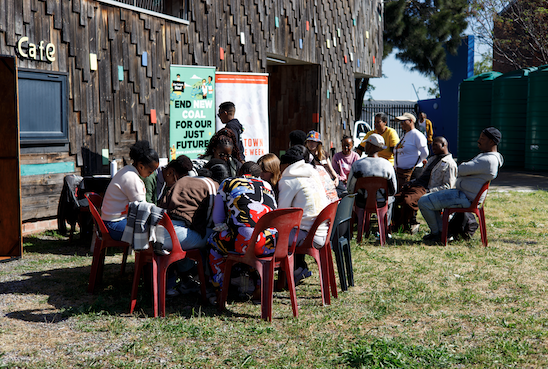
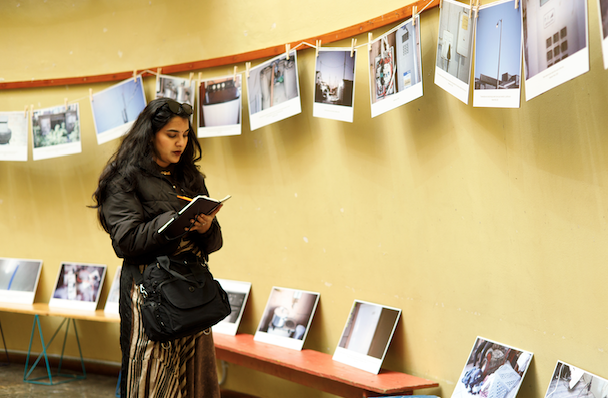
On Day two, we transformed Guga S'thebe into a Climate Café where we unpacked the industry's grip on energy policy, and what it will take to build a just, people-centred energy transition.
Together with Project 90, Fossil Free SA and the Alternative Information and Development Centre, we explored everything from lobbying and greenwashing to the current energy embargo, to digging into what energy sovereignty really means for South Africa. We also took a moment to celebrate the collective power communities are building to demand accountability.
We closed the day at Bertha House with a screening of 'We Can't See the Sunset', followed by a panel unpacking energy justice, extraction, and community resistance. This Open Secrets' documentary revealed the climate costs borne by communities living at the margins. The film envisions a dancer living in that future, while listening keenly to community testimonies and investigations unfolding in the present.
Day 3: Sowing Seeds for System Change
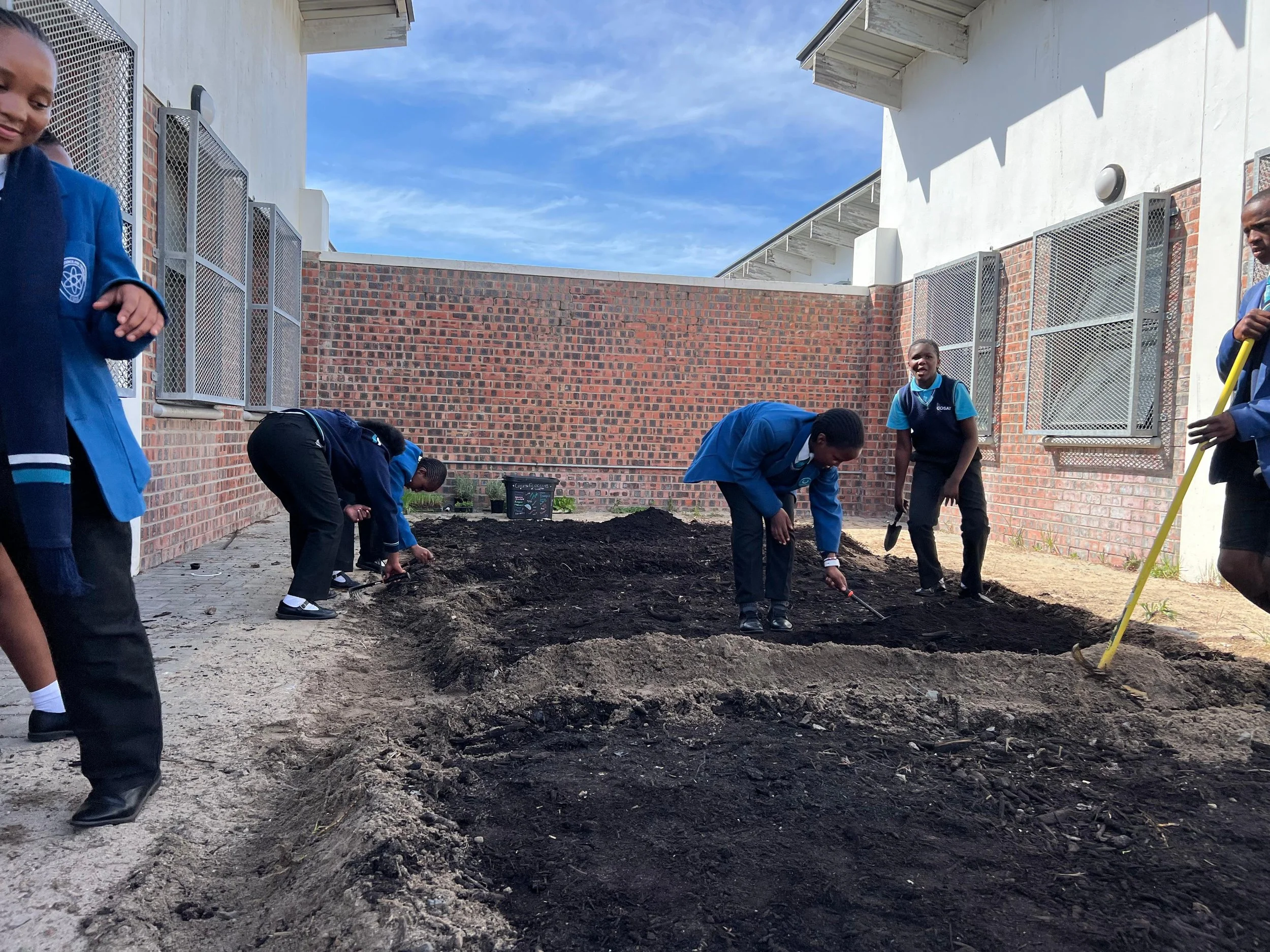
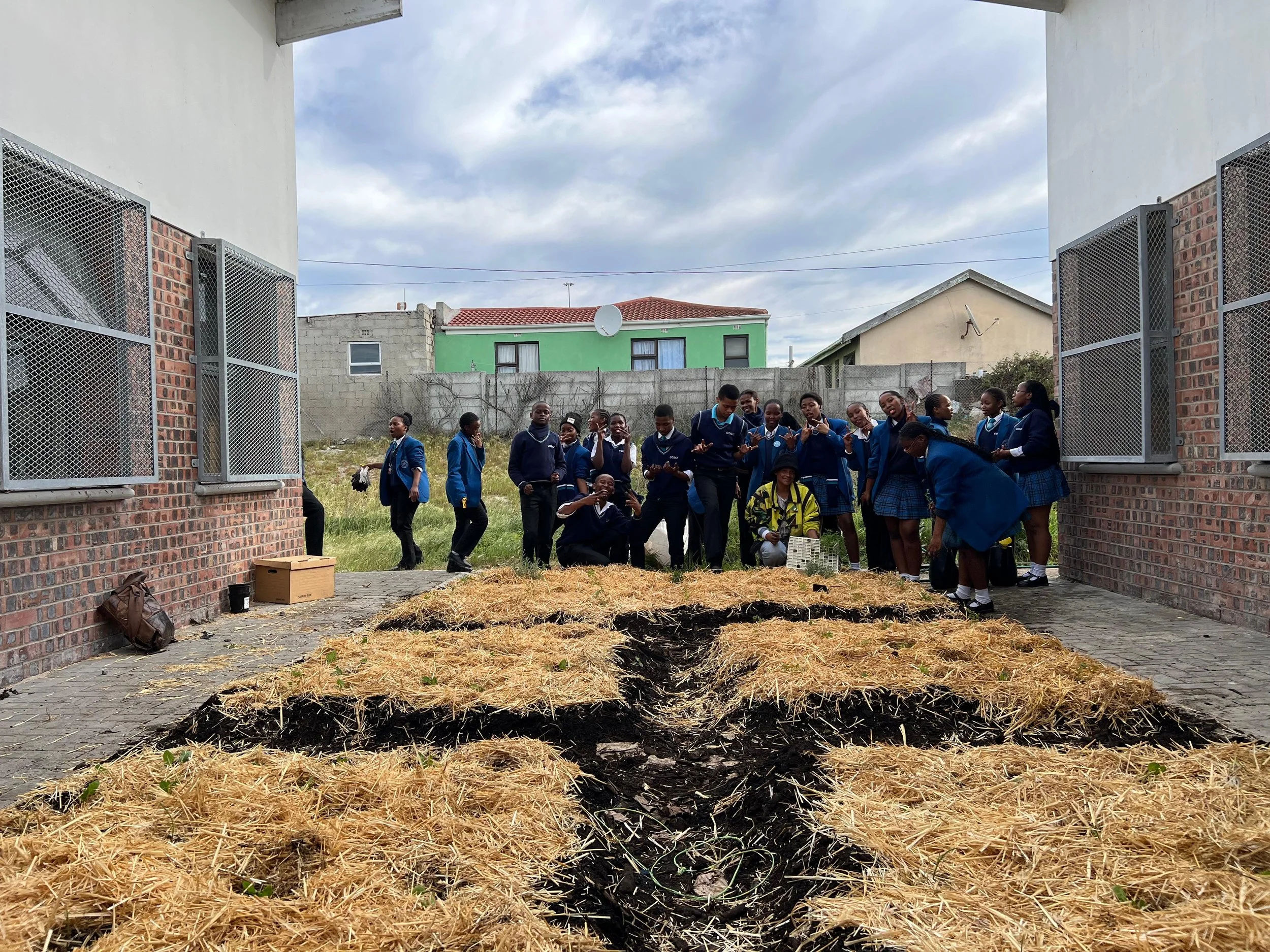
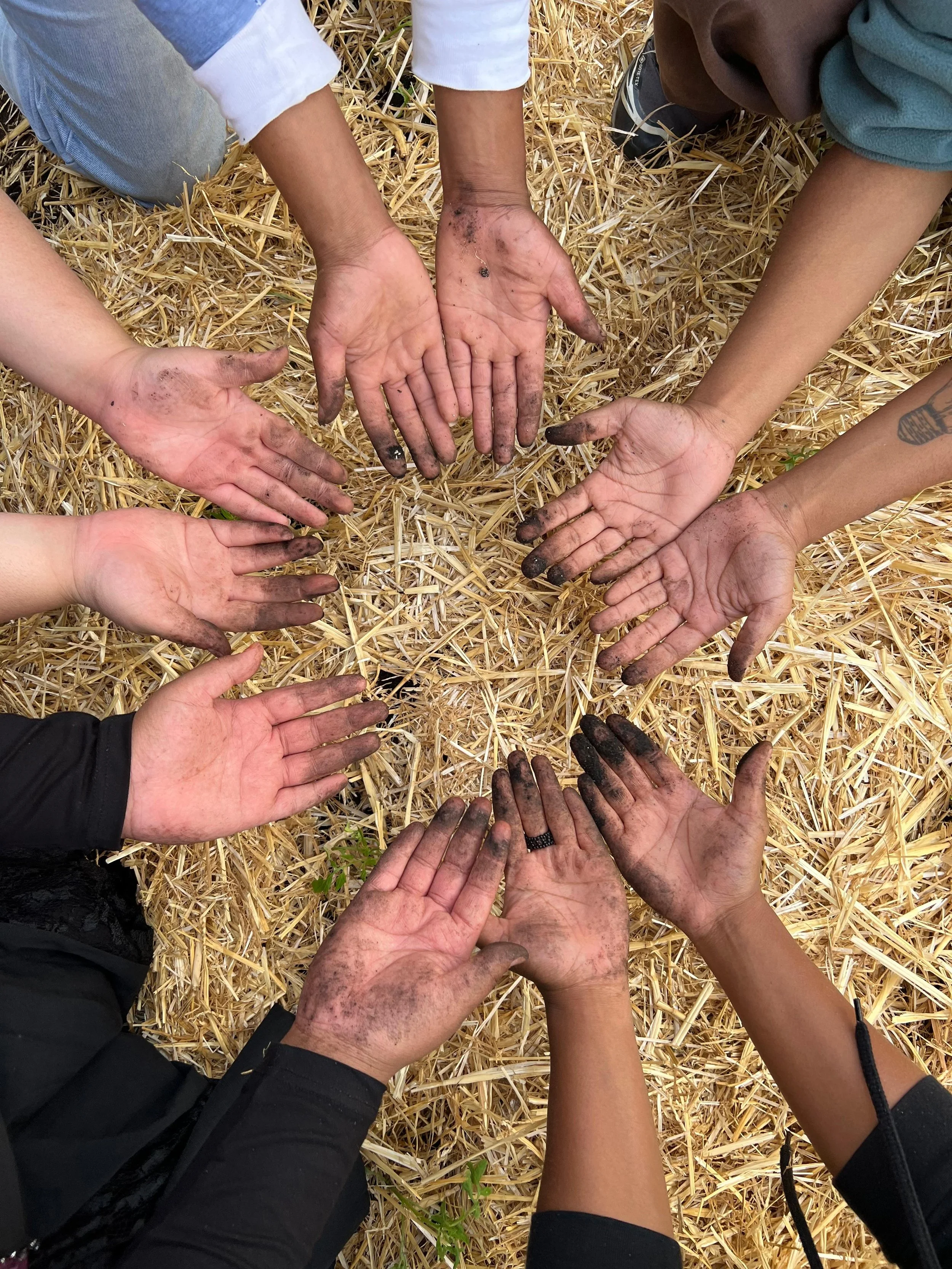
Day three saw us working with food justice, asking who owns the land, who controls the water, and who decides what grows and who eats. We started the day at Bertha House with Seed Biblioteek where we explored their seed library, watched short films on food sovereignty and climate justice, and got our hands dirty in a zine workshop imagining what resilient food systems could look like in Cape Town.
From there, we headed off to the University of Cape Town’s Green Campus initiative and walked through their campus garden, seeing food sovereignty growing from the ground up.
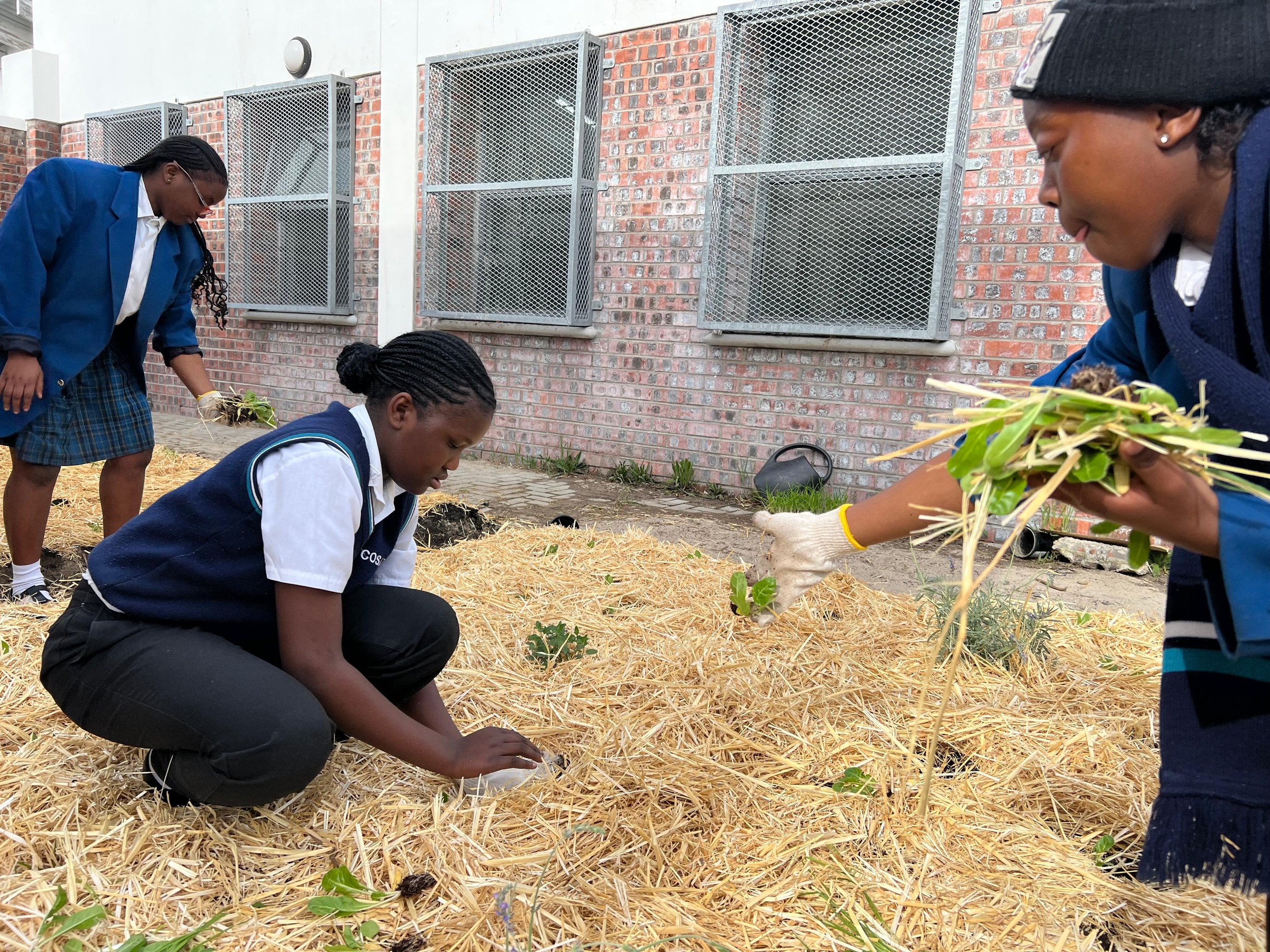
Meanwhile, in Khayelitsha, Mzanzi Organics joined us at a high school eco club, where students planted tomato, spinach, onions and lavender plants, getting them to think about where their food comes from while enjoying the process of getting their hands into the soil.
Day 4: Ripples of Change
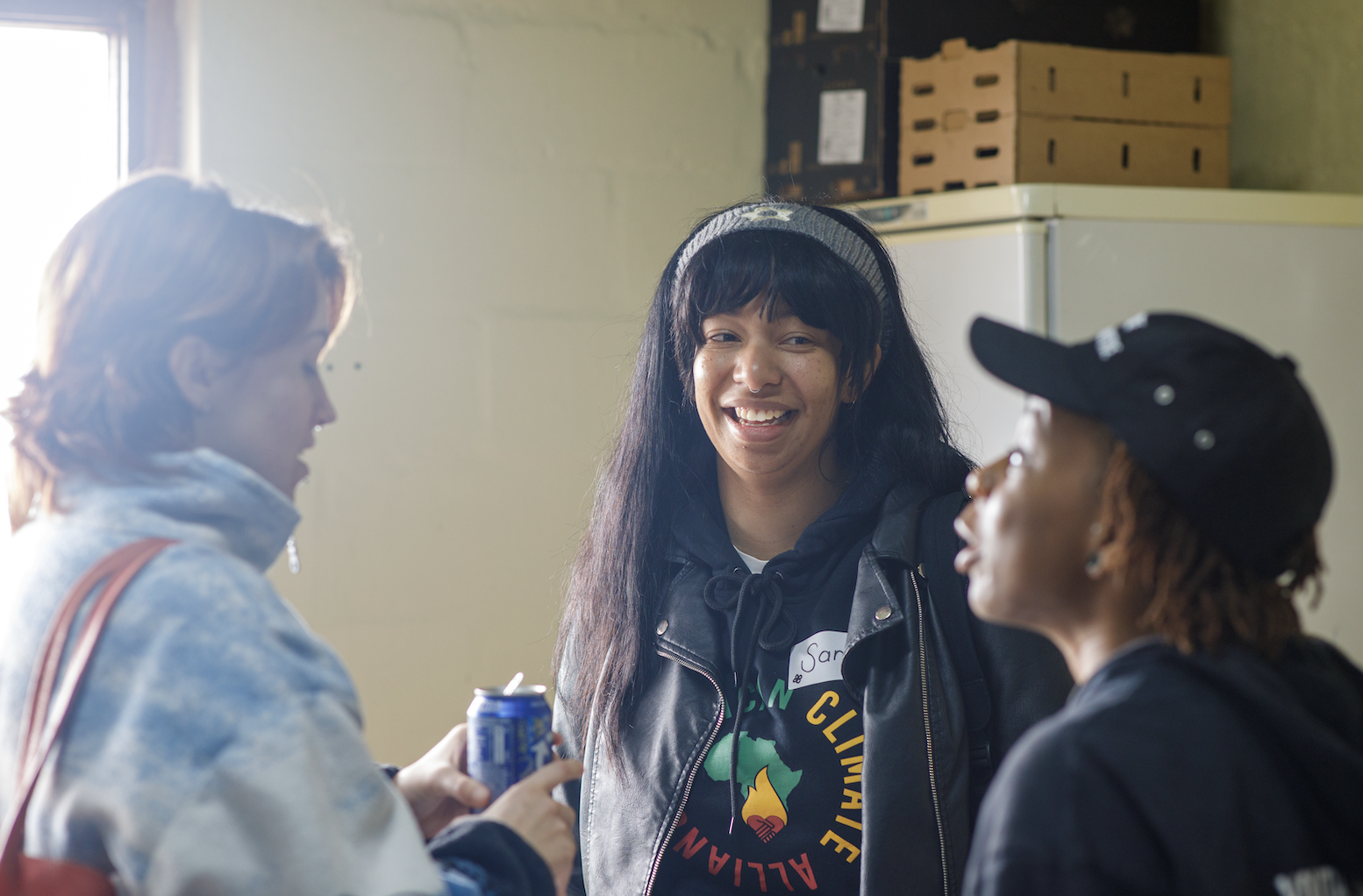
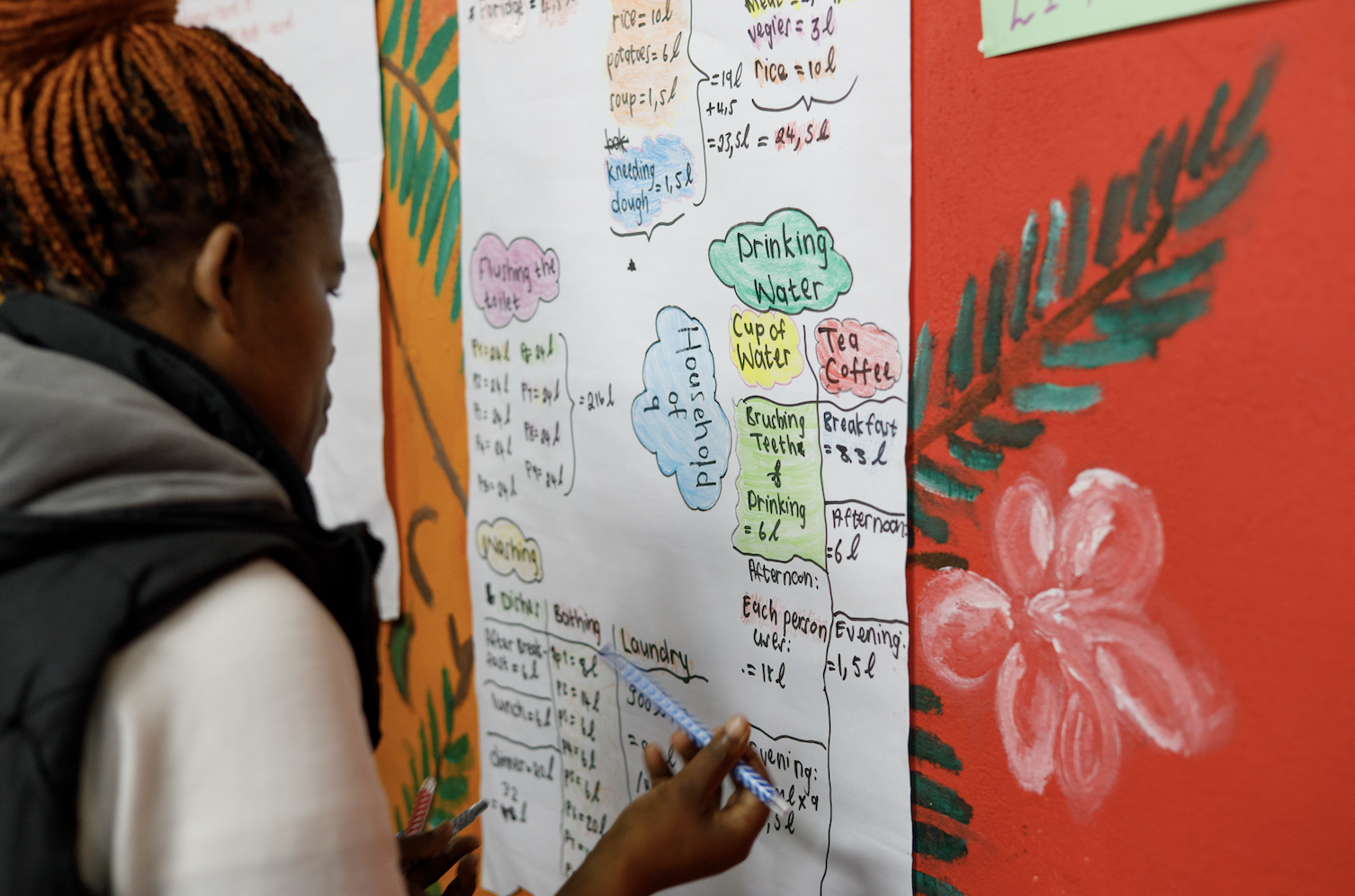
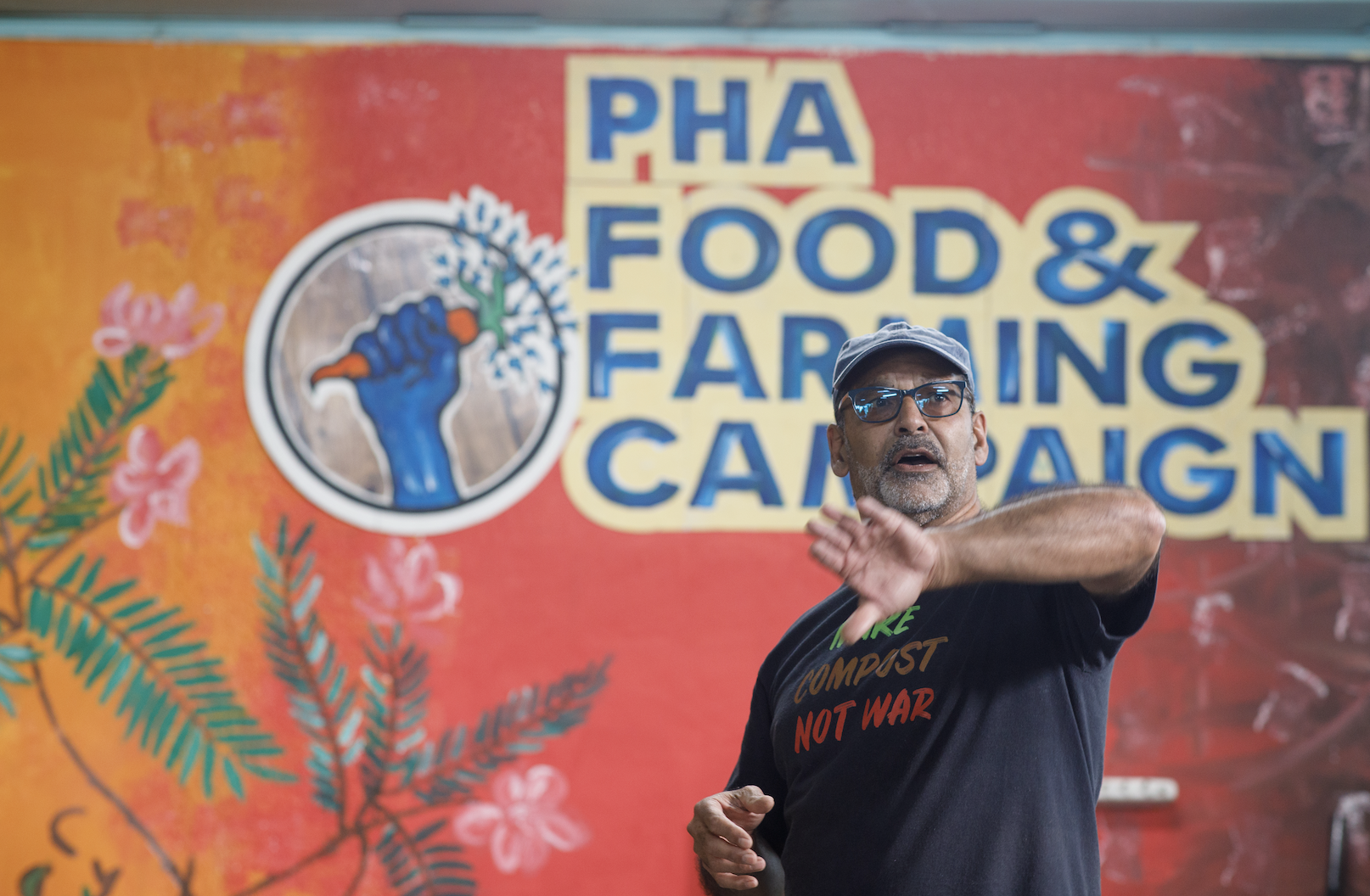
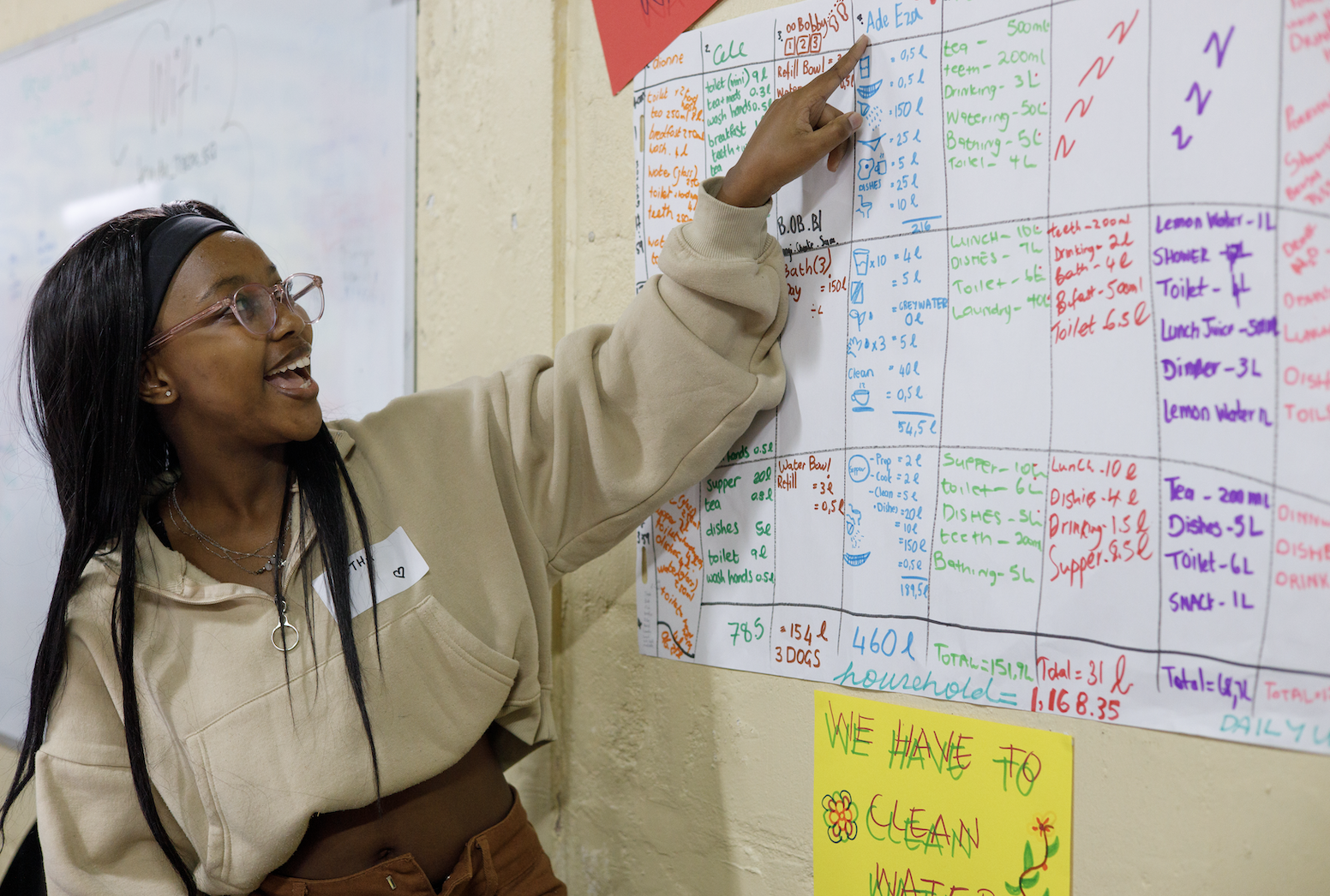
On Day four, the African Water Commons Collective and their Water Action Committee joined us in the Philippi Horticultural Area (PHA), specifically at Vegkop Farm - the home of the PHA campaign - to explore water justice, the neoliberal policies the government enforces, and how that's connected to the soil and the land. Water justice means asking who has access, who doesn't, and why. In the Philippi Horticultural Area, that question is decades old. The PHA sits on one of Cape Town's most vital aquifers, yet its land and water have faced a long fight against unsustainable development.
Together, we engaged in a water mapping workshop, explored the PHA area and examined the intersecting pressures of development, climate change, and growing resource demands; reflecting on what water justice means in practice.
Day 5: Borders and Belonging
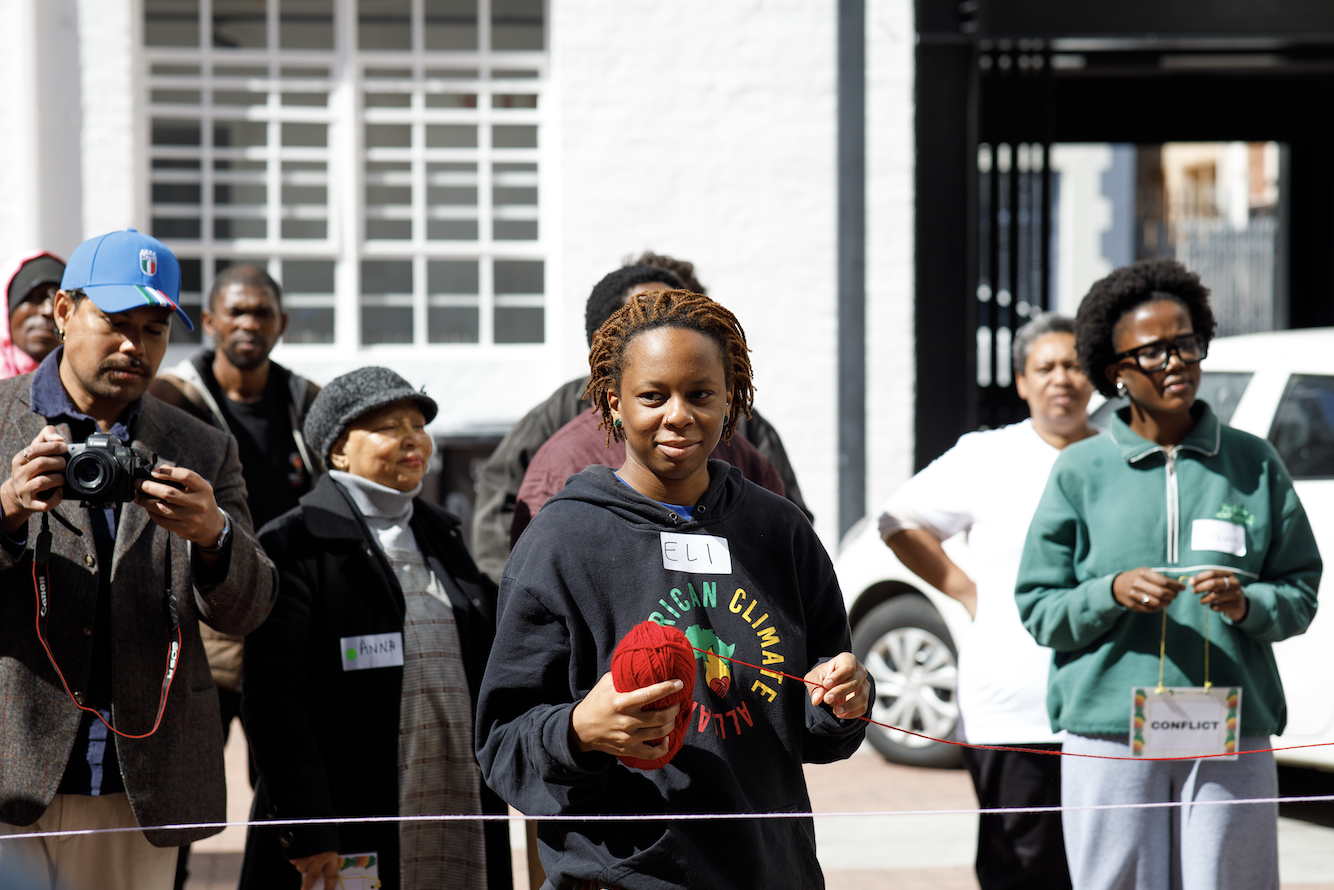
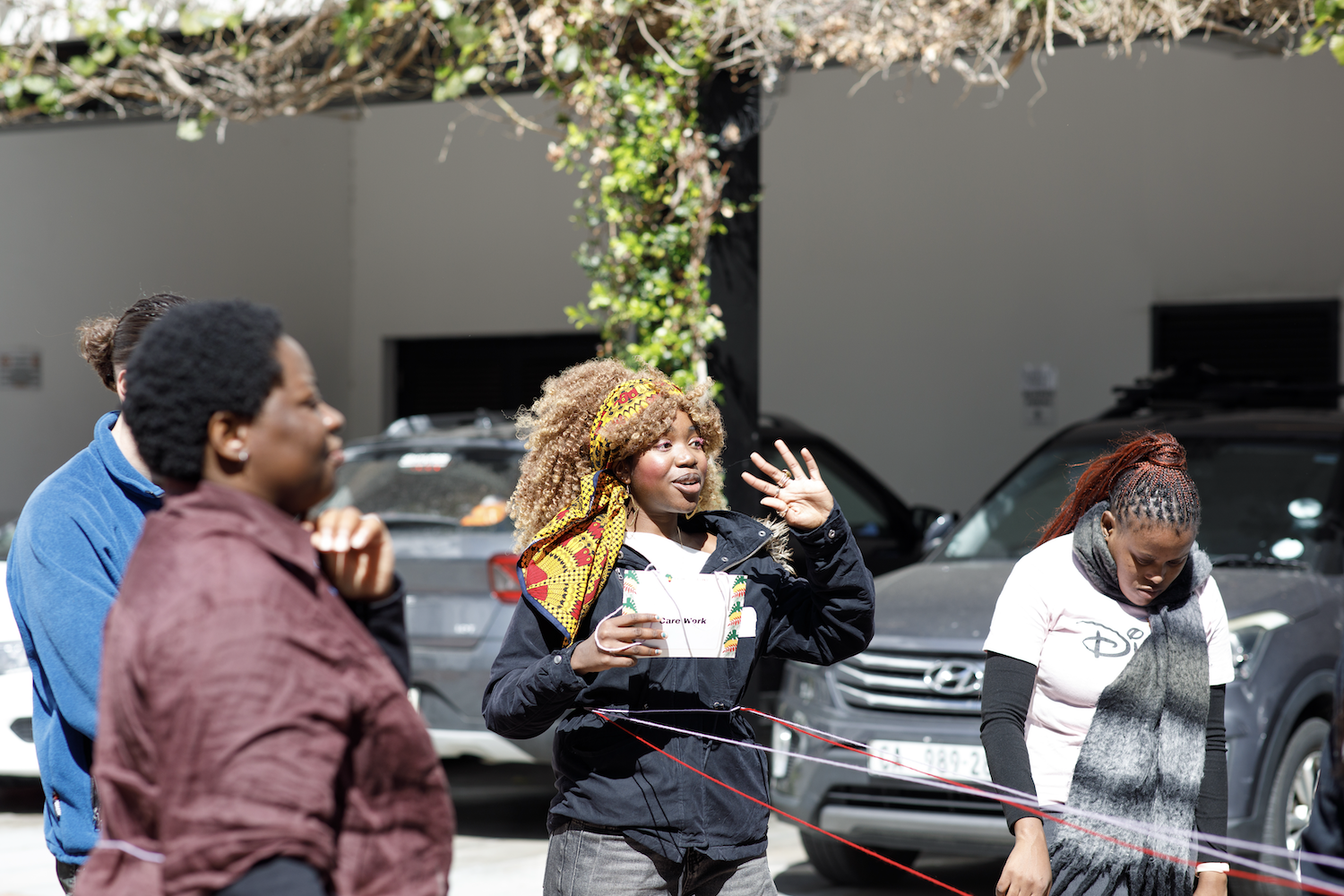
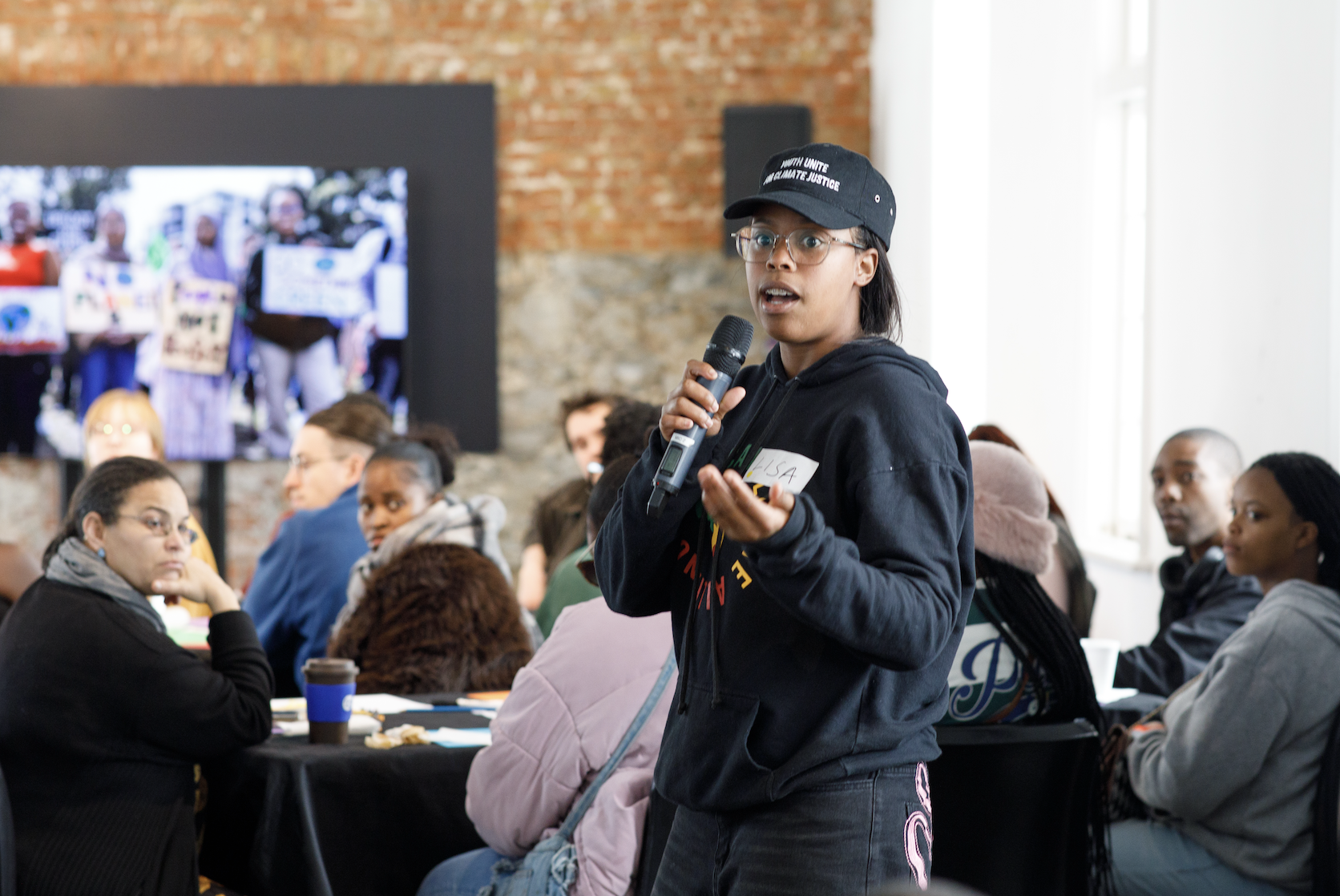
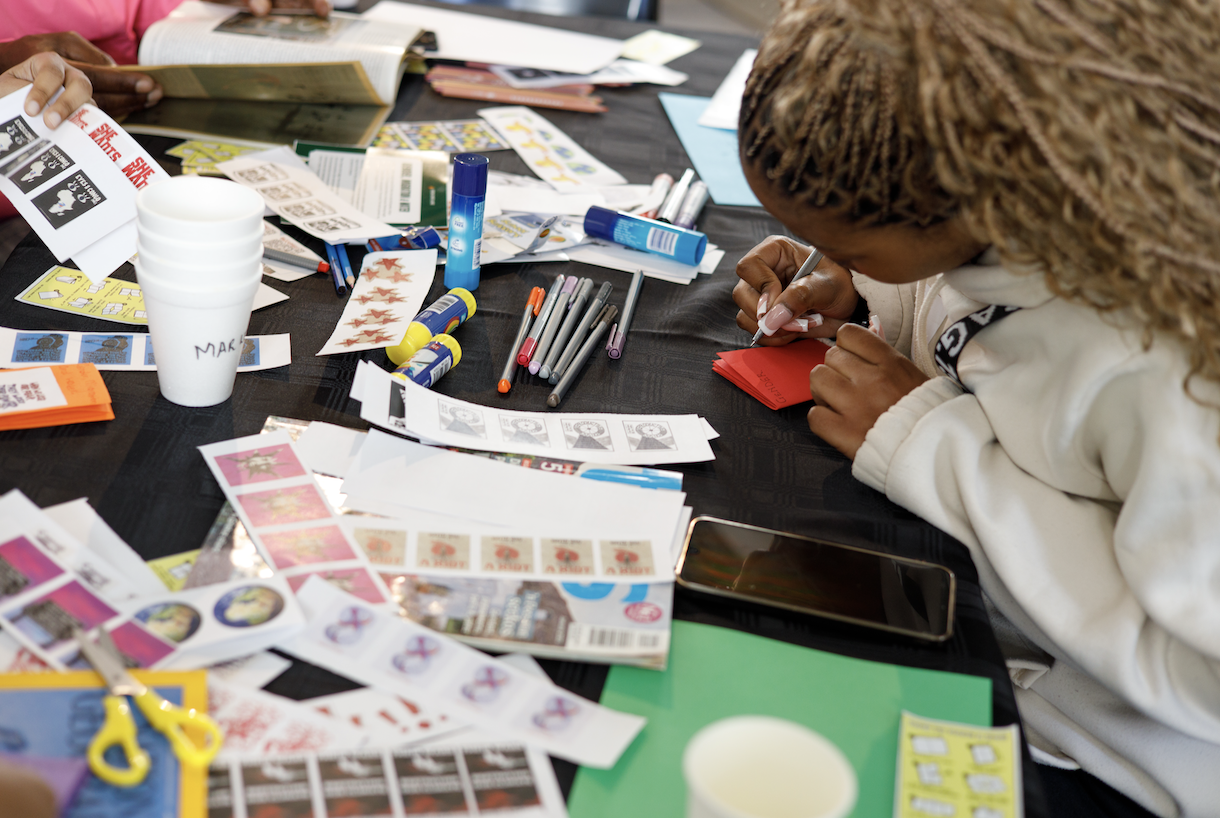
On day five, we looked at what happens when the pressures of climate change and inequity become too much to bear. People are forced to move, and the costs of displacement are not shared equally. Women, queer people, and migrants often face the greatest risks and barriers when homes, livelihoods, and communities are disrupted.
At the the Desmond and Leah Tutu Legacy Foundation, we creatively mapped the links between climate, gender, and migration through a Web of Life exercise, a connecting-the-dots teach-in, and table conversations using thematic cards and crafts. Thereafter, we joined Queer Food Growing Collective and Transcending History Tours, exploring these same questions through a guided tour and reflection.
Day 6: Solidarity Picnic
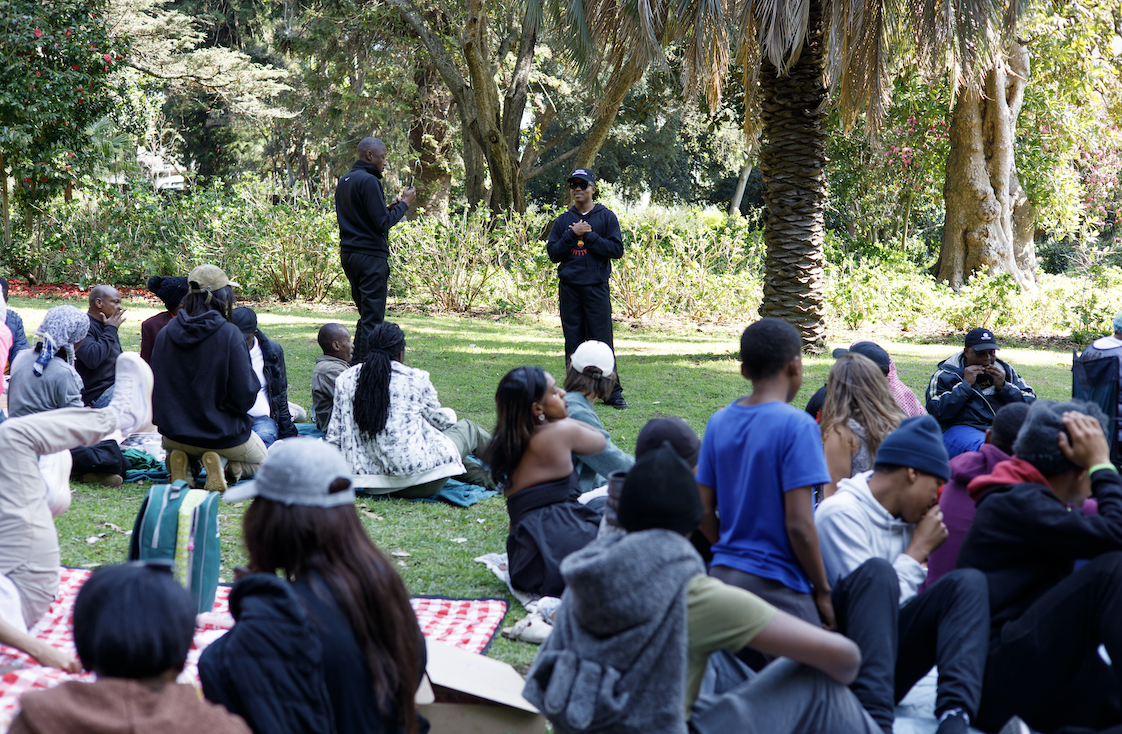
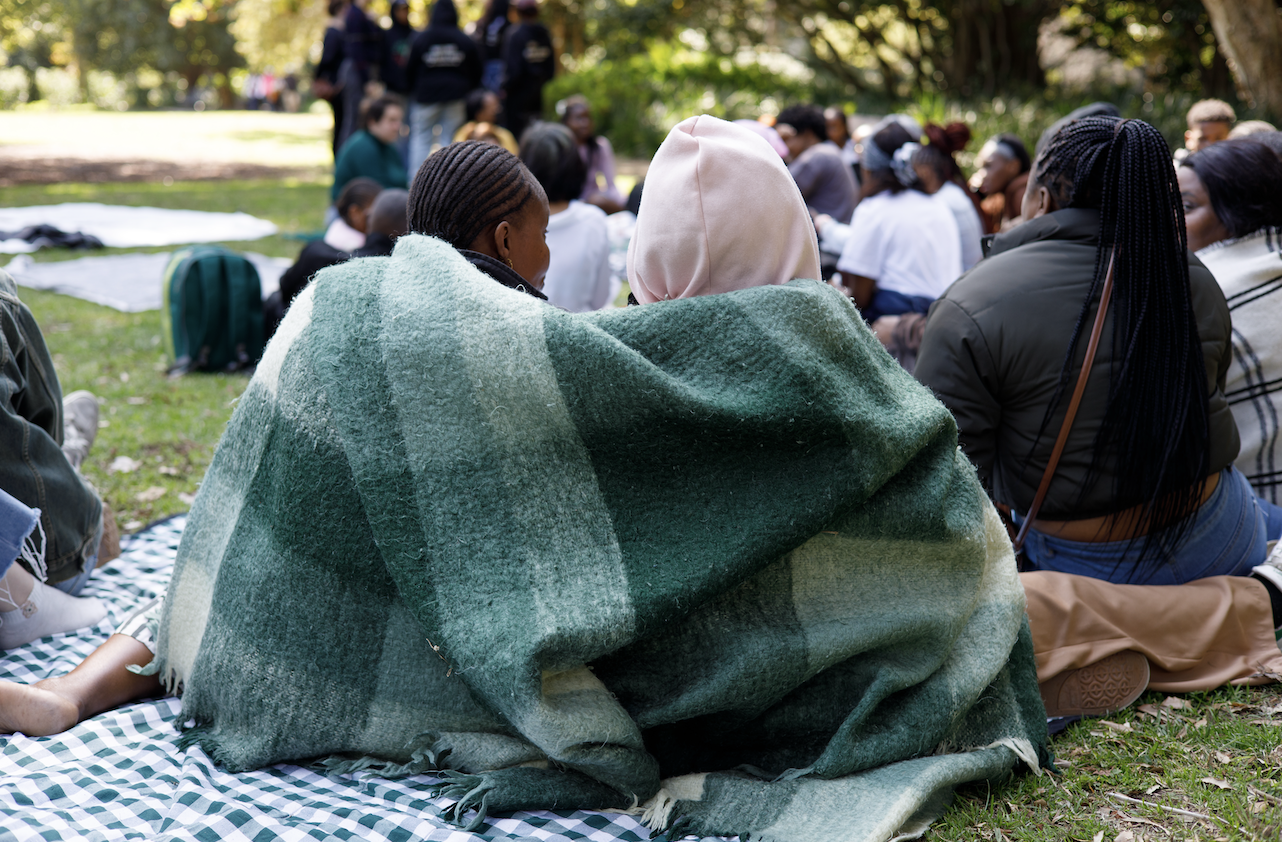
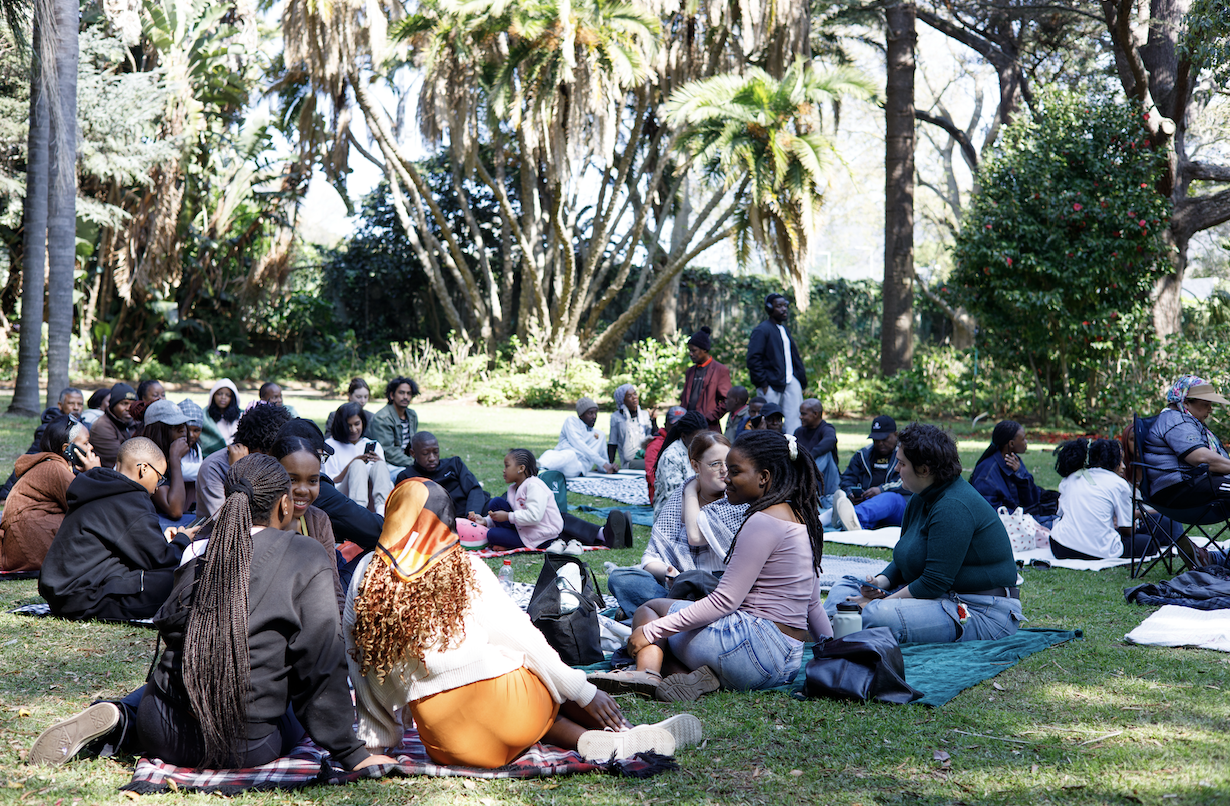
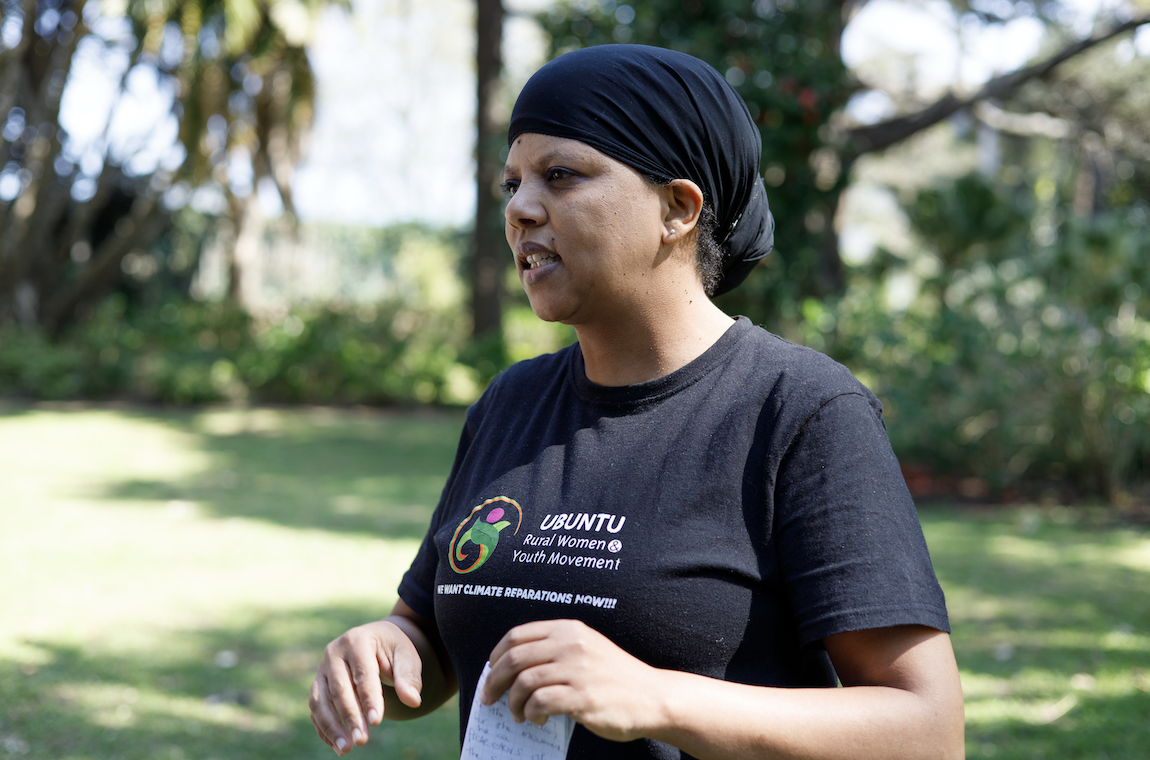
To close off the week, we gathered at Arderne Gardens to connect our struggle here to the struggles of communities resisting extraction, occupation, dispossession, and imperialism across Africa and the world. From Cape Town to Sudan, to the Congo, to Palestine, this is one fight. Through shared food, poetry, and political reflection, we held African solidarity and global solidarity in one conversation, and reminded ourselves that division, including Afrophobia, only ever serves the systems that benefit when we're turned against each other.
Key Takeaways
Climate justice is social justice: The week showed how climate change amplifies inequalities in housing, transport, and land access, making climate action inseparable from addressing South Africa’s historical and spatial injustices.
Youth leadership: Young people's involvement throughout the week demonstrated their crucial role in shaping a more just and sustainable future.
Community-led solutions: Grassroots organisers showcased practical responses, like seed libraries, community gardens, and local water committees, that reclaim control over food, land, and resources to build resilience.
Energy and water justice: The week exposed industry capture and highlighted the need for accountable, people-centered energy systems and protection of water as a fundamental right.
Global solidarity: The closing Solidarity Picnic emphasized unity across communities resisting extraction, occupation, dispossession, and imperialism across Africa and the world
Thank you to each and evert person that joined us and to all our incredible partners that made the week possible! Partner organisations include Ndifuna Ukwazi, Open Secrets, Mzanzi Organics, Violence Prevention through Urban Upgrading (VPUU), Project 90 by 2030, Fossil Free South Africa, Alternative Information and Development Centre, Seed Biblioteek, UCT Green Campus Initiative, PHA campaign, African Water Commons Collective and the Queer Growing Food Collective.